Sunzaun
The Vertical Solar System
What is Vertical Solar PV?
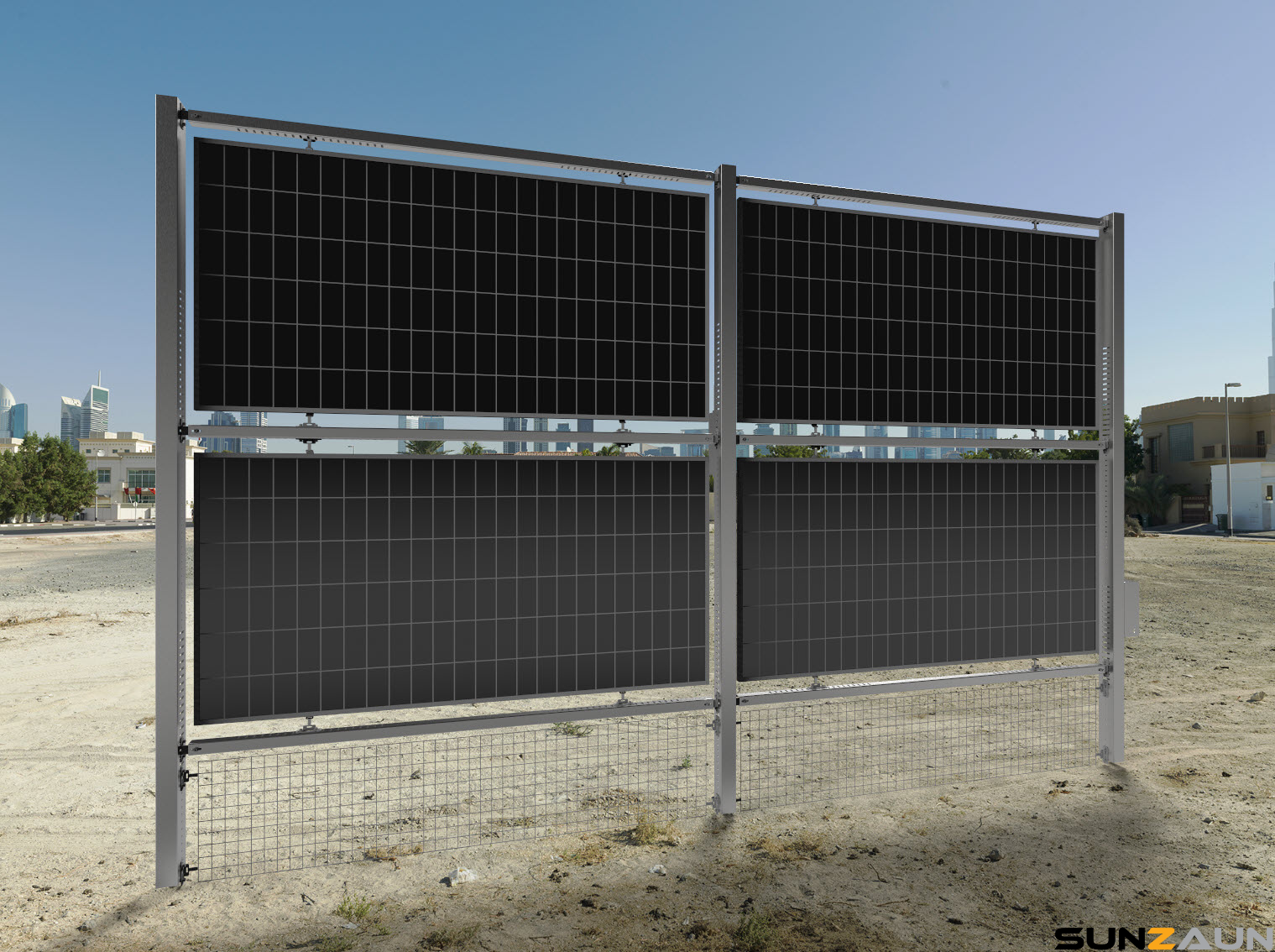
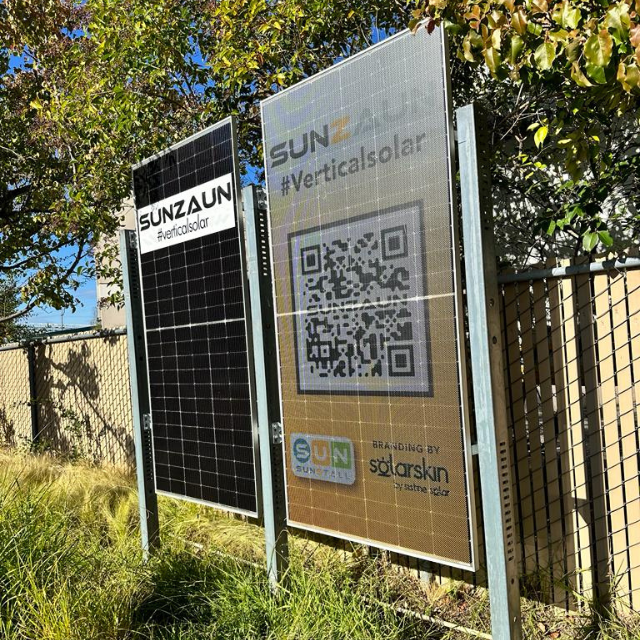
Vertical solar PV racking represents an innovative leap in photovoltaic energy generation. Unlike traditional solar panels that are installed on rooftops or large open fields, vertical racking allows panels to stand upright, making them highly space-efficient. Sunzaun is a pioneering product in this category, combining bifacial module technology with multi-functional applications.
By utilizing bifacial solar panels, Sunzaun captures sunlight from both sides, increasing energy yield throughout the day. Unlike conventional systems that produce maximum power at midday, Sunzaun generates energy during the morning and evening hours when electricity demand is typically higher.
Features
Technical Data
Applications of Vertical Solar
Sunzaun in Portrait Orientation
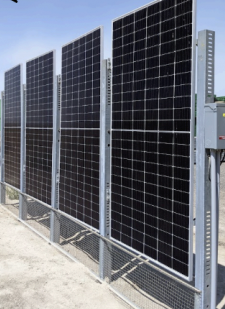
The Sunzaun Portrait Setup is the popular alternative to the traditional horizontal solar panel configuration. Its vertical panel arrangement maximizes space efficiency, especially in urban environments with limited space, while still delivering optimal energy production. By capturing sunlight at various angles throughout the day, the Portrait setup ensures high efficiency, making it the go-to choice for those looking to combine performance with a sleek, modern design.
Sunzaun in Horizontal Orientation
CURRENTLY IN RESEARCH AND DEVELOPMENT. We expect to have product available in fall 2026, please inquire if interested in this orientation.
The Horizontal Sunzaun Setup offers high flexibility and can provide a high energy output in larger spaces due to the use of two bifacial horizontal positioning Solar panels.
Ultimately, the choice depends on the specific requirements of space, design preferences, and energy goals.