vertical

Breaking Ground in Oregon: The Future of Residential Solar is Vertical

Breaking Ground in Oregon: The Future of Residential Solar is Vertical 640 480 Sunzaun

We are thrilled to announce that in July 2025, Sunzaun reached a major milestone! In partnership with Cascade Solar, we completed our very first residential solar fence in Portland, Oregon. This 5.74 kW project features 11 sleek modules, one of the first of its kind in the United States.

The Science Behind the Shine: Technical Advantages

What makes vertical solar panels so effective? Unlike traditional horizontal panels that peak in production only when the sun is directly overhead, vertical bifacial modules capture sunlight from both sides. In regions like the Pacific Northwest, where the sun sits lower in the sky for much of the year, a south-oriented vertical system can significantly optimize energy yield throughout late fall, winter, and early spring. Conversationally, east- and west-facing modules perform best in the summer months. This is the benefit of having perpendicular fencing that allows for a well-rounded energy production curve

Furthermore, vertical panels are naturally more resilient. Their upright position means they shed snow effortlessly and accumulate far less dust and debris than roof-mounted systems. This reduction in “soiling” ensures the panels maintain peak efficiency with minimal maintenance, even during Oregon’s rainy seasons.

Why a solar fence? As energy prices continue to climb, homeowners are looking for smarter ways to power their lives. While rooftop solar is a fantastic option, it isn’t always the perfect fit for every home due to roof orientation or shading. That’s where the “dual-use” revolution comes in. By turning a standard property boundary into a clean energy generator, homeowners can enjoy the benefits of solar without compromising their roofline.

Seamless Integration: A Homeowner’s Dream

For many homeowners, the most compelling reason to go vertical is the installation process. Roof-mounted solar often requires a detailed structural assessment and, in some cases, costly roof reinforcements before installation can even begin. A Sunzaun vertical solar fence, however, is installed as a standalone structure along your property boundary. That means no drilling into your shingles, no modifications to your roof, and no interference with your home’s existing architecture.

Another often-overlooked advantage is long-term maintenance. Roofs don’t last forever, and when it’s time to replace or repair one, rooftop solar panels typically need to be removed and reinstalled; a process that can add thousands of dollars to the cost of roofing work. Because a vertical solar fence is independent of your home infrastructure, roof repairs can be completed without ever touching your solar system, avoiding additional labor costs.

The installation is faster, less invasive, and serves a double purpose: providing privacy and security for your yard while simultaneously slashing your utility bills. It’s a true “plug-and-play” solution for the modern sustainable home.

This project is just the beginning of a useful trend that maximizes space and efficiency. We are incredibly excited to continue our journey with the Cascade Solar team and can’t wait to see what the future of vertical solar brings to neighborhoods across the country!

Ready to Power Your Perimeter?

The era of the smart fence is here, and we want to help you be a part of it. Whether you’re looking to supplement your existing energy source or are just starting your solar journey, vertical solutions offer a unique blend of style and substance.

Are you curious about how a vertical solar fence would look on your property? Reach out to our team today to learn more about our technology and get a custom consultation. Let’s build a brighter, greener future together!
Vertical Solar Is Changing the Game: Smarter Design, Real Results for Commercial Projects

Vertical Solar Is Changing the Game: Smarter Design, Real Results for Commercial Projects 512 288 Sunzaun

What if your business or facility could generate solar power all day long—even in snow-heavy regions, tight urban sites, or areas with limited rooftop availability?

That’s exactly what vertical solar installations are making possible.

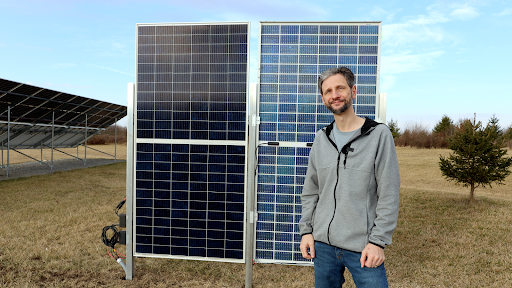
In a new YouTube breakdown, DIY solar enthusiast Projects With Everyday Dave explores how vertical solar setups—especially when paired with bifacial panels—are transforming solar efficiency in real-world environments. While his findings are residential in scale, the underlying data offers compelling insights for commercial developers, infrastructure planners, and large-scale property owners exploring smarter, space-efficient solar solutions.


What Is Vertical Solar?

Vertical solar refers to solar panels mounted upright (typically at a 90° angle), often facing east and west to capture sunlight throughout the day. Unlike traditional rooftop arrays tilted south, vertical orientation offers distinct advantages for large-scale applications:

  • Better solar generation in morning and afternoon hours
  • Reduced snow and debris accumulation
  • Installation flexibility along fences, façades, and perimeters

While bifacial panels (which generate energy from both sides) amplify these benefits, orientation is the real innovation, offering commercial projects new opportunities to integrate solar without sacrificing space or accessibility.

“You get morning sun on one side, and then afternoon sun on the other—it’s like having two shifts of power generation,” Dave explains.


Commercial Advantages: Where Vertical Solar Excels

Dave’s real-world data points to several key advantages that scale beautifully for business, industrial, and infrastructure use cases:

Reliable Performance in Snowy or Harsh Conditions

In colder climates, snow accumulation on rooftop panels causes maintenance headaches and production loss. Vertical panels eliminate buildup and maintain consistent output year-round—crucial for mission-critical facilities and distributed energy systems.

“No need to brush them off—huge for snowy regions,” Dave notes.

 Dual-Peak Output = Smarter Load Matching

East-west vertical arrays create dual generation peaks—morning and late afternoon—closely aligning with real-world commercial energy consumption, reducing demand spikes and enhancing storage and load management strategies.

“Those dual peaks show up clearly in the winter months,” says Dave, citing side-by-side production tests.

 Maximize Vertical Surfaces & Unused Perimeters

In dense commercial zones, rooftop space is often limited or reserved. Vertical solar enables energy generation from:

  • Parking lot boundaries
  • Security fences
  • Sound barriers
  • Retaining walls and building façades

This unlocks energy potential from unused vertical surfaces—turning barriers into power-generating assets.

“You can tuck solar into edges and margins—ideal for tight commercial footprints,” Dave shares.


 Performance in Real-World Conditions

While Dave shows that total average production for vertical panels is generally less than tilted panels, he explains that “In cloudy or snowy weather, the vertical setup held its own—even beat roof panels on some days.” So, even with variable weather, vertical panels proved surprisingly competitive. Sometimes they outperforming rooftop arrays, especially during:

  • Cloud cover
  • Snow events
  • Morning and evening load periods
  • Soiling (natural dust buildup)

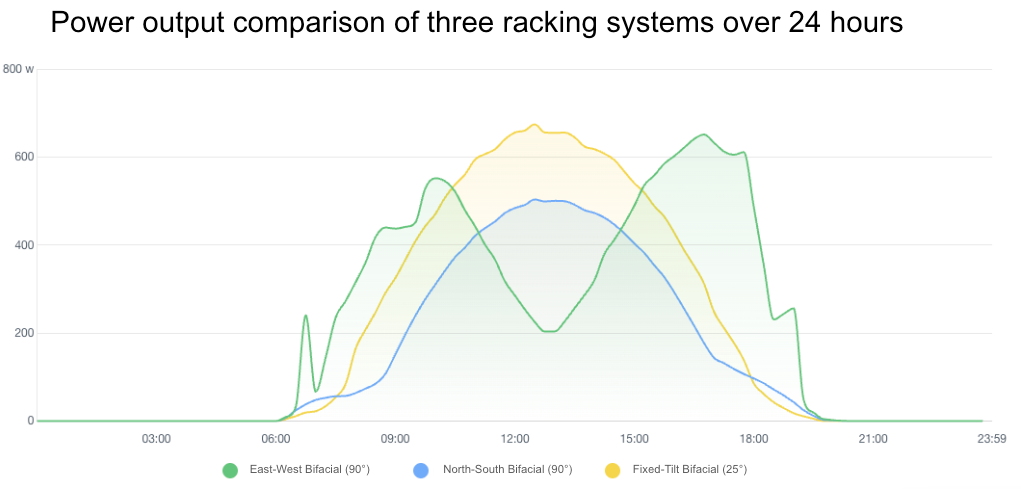
Speaking of morning and evening load periods (as seen in Figure 1), pairing east-west vertical arrays with north-south bifacial configurations, such as perimeter fences or site boundaries, can create a balanced, full-day generation profile. This is particularly ideal for commercial operations with long or irregular hours.

Figure 1: A diurnal power generation curve from the Sunzaun test site in Visalia, California, recorded on a day in mid-August 2024. All systems use the same module model; the only variable is orientation and tilt.


Application Spotlight: Where Vertical Solar Fits in Commercial Settings

Vertical solar is well-suited for:

  • Industrial, commercial, and private spaces such hospitals, data centers, and energy-intensive campuses
  • Agrivoltaic and rural infrastructure projects
  • Municipal and transportation facilities
  • Developments with limited roof access

It avoids challenges like:

  • Roof penetrations and structural retrofits
  • Shading from HVAC units or architecture
  • Safety clearances and access issues

“If your roof isn’t ideal, don’t force it. Go vertical. It’s scalable, accessible, and flexible,” says Dave.


Cost Considerations & Long-Term Value

While vertical arrays may require custom racking and bifacial panel premiums, the maintenance savings, flexible siting, and year-round reliability offer a compelling value proposition for long-term energy planning.

“In some climates, vertical systems may even outperform roof setups annually—especially when snow and shading are factors,” Dave emphasizes.


Final Thoughts: A Smarter Fit for Forward-Thinking Projects

Vertical solar isn’t just a niche idea—it’s a scalable design solution for commercial and infrastructure leaders looking to future-proof their energy strategy. From greater surface utilization to more consistent load matching, vertical systems offer a modular, resilient, and strategic path forward.

“It’s not just about cramming panels on a roof anymore,” Dave concludes. “Vertical solar gives you options—and at scale, those options make a lot of sense.”


Watch the Full Videos

🔗 Visit Projects With Everyday Dave on YouTube for real-world performance tests and innovative solar design ideas.