DreamVertical

Why Vertical Bifacial Panels Along Canals Could Be a Game-Changer

Why Vertical Bifacial Panels Along Canals Could Be a Game-Changer 1021 571 Sunzaun

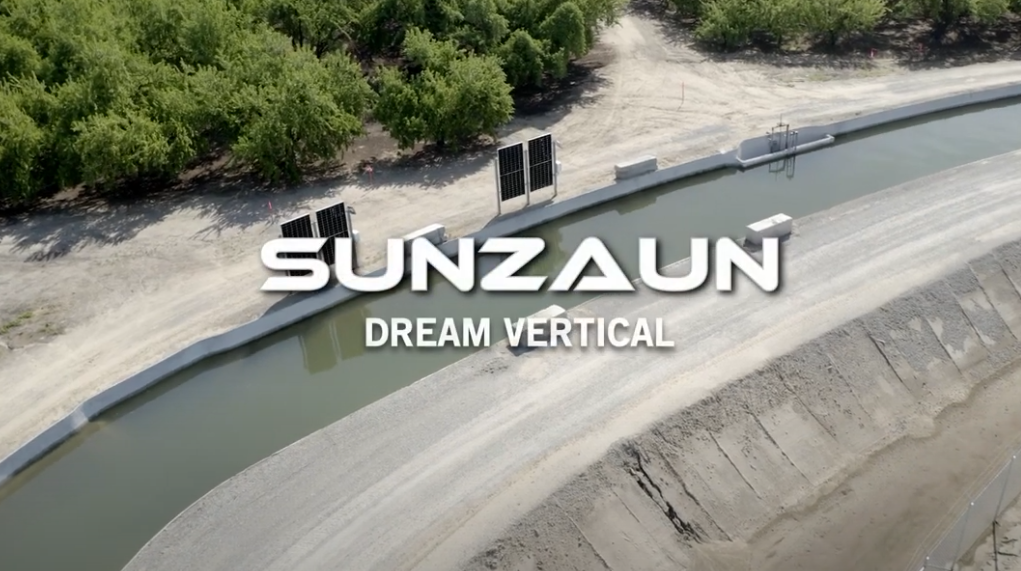
Solar energy systems are evolving—not just in what they’re made of but also in how and where they’re installed. One innovative approach gaining attention is using vertical bifacial solar panels on the sides of irrigation canals.

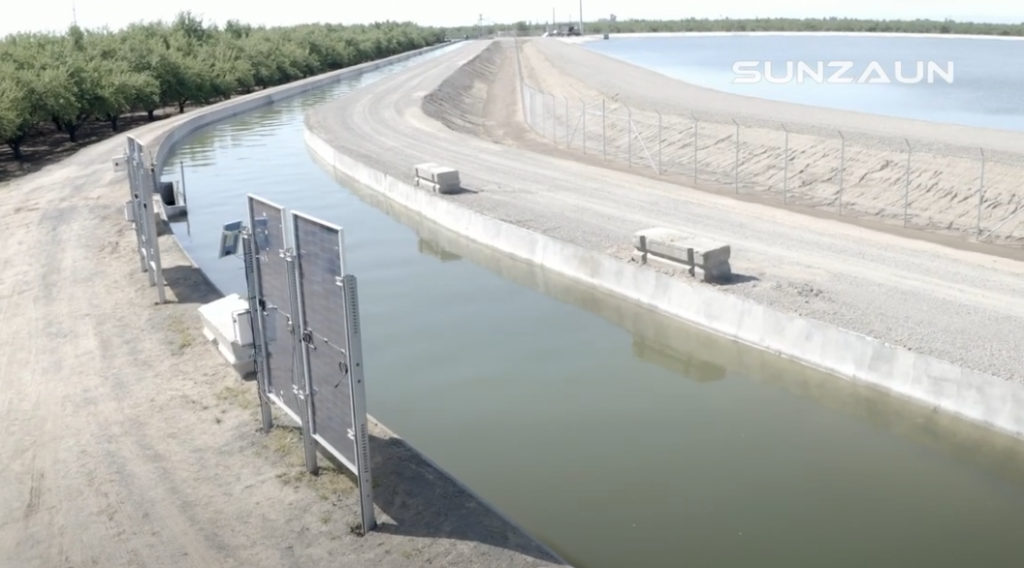
These panels collect sunlight from the front and back, allowing them to harness more energy throughout the day. But beyond the tech itself, it’s the placement strategy that makes this idea stand out.

Why Go Vertical — Along a Canal?

Traditional solar arrays are typically installed at a tilt (e.g., 20°) facing south. That works well, but it requires open land, is prone to dust accumulation, and creates steep seasonal production curves with big summer peaks and winter valleys.

In contrast, vertical bifacial systems can:

  • Collect light on both sides, especially when ground or nearby surfaces reflect sunlight.
  • It stays much cleaner in dusty environments—vertical orientation reduces soiling by up to 95% compared to tilted panels¹.
  • Perform better in winter months, leading to a flatter seasonal production profile — important for grid stability².

When placed along a single canal bank, these panels avoid the need for complex mounting over the water. This is a major advantage in regions where canal access is only available from one side or where installing overhead structures is too costly or logistically impractical.


What About the Energy Output?

Modeling shows that a south-facing vertical bifacial array, without any reflector, can deliver about 87% of the annual energy of a standard south-facing 20° tilted monofacial array — but with superior performance in the non-summer months².

Adding a simple reflective tarp across the canal (or part of it) can increase that output by another 19%–24 %. If a hybrid reflector is used — combining a durable base with a shiny aluminized Mylar top layer — the boost can reach 41%–44%³.

In addition, this setup helps to reduce evaporation from the canal by about 61%, thanks to shading and reduced wind-driven losses — a valuable bonus in water-stressed regions⁴.

To put that into perspective: saving 610,000 gallons per year (from a canal segment losing 1 million gallons annually) is equivalent to the annual water use of 9 to 22 Californians, depending on regional consumption habits⁵.

In agriculture, this amount of water could irrigate around 0.37 acres of rice or 0.63 acres of field crops, showing how solar canals help conserve both water and energy⁶.

Now scale that up: California has approximately 4,000 miles (6,400 km) of irrigation canals⁷. If similar systems were deployed along the canal network, they could save up to 63 billion gallons of water per year⁸ — enough to supply more than 2 million people annually or to irrigate over 50,000 acres of farmland⁸.


Where and When Does It Make Sense?

This design is particularly well-suited to:

  • North-south oriented canals less than 17 feet (5.2 m) wide⁴
  • Dusty, high-soiling environments (e.g., California’s Central Valley)¹
  • Locations where land availability is limited
  • Projects where only one canal bank is accessible

In these scenarios, vertical systems can be cost-competitive or even cheaper than traditional canopy systems – especially as structural and installation costs (e.g., steel, concrete) continue to rise. Modeling suggests that vertical systems could remain economically viable even on canals up to 25 feet wide, depending on material and labor costs⁴.


Conclusion

Vertical bifacial systems – like SunZaun – offer a promising alternative to conventional solar designs, especially for dual-use applications like canals. They’re more space-efficient, resilient to dust, and better balanced across seasons. And when paired with a smart reflector design, they can rival — or even surpass — traditional systems in total output.

Rethinking orientation and placement may be just as important as improving the panels themselves.

Sources

  1. Bhaduri & Kottantharayil, Soiling Analysis of Vertical PV, IEEE, 2019
    https://ieeexplore.ieee.org/document/8887284
  2. Reagan & Kurtz, Energetic Comparison of Vertical Bifacial to Tilted Monofacial Solar, IEEE, 2022
    https://ieeexplore.ieee.org/abstract/document/9924604
  3. Reagan et al., Material Selection and Cost Modeling for Reflectors in Vertical Canal PV Systems, IEEE, 2024
    https://ieeexplore.ieee.org/abstract/document/10829584
  4. Field data from UC Merced Project Nexus and submitted PVSC 2025 paper (in review)
  5. Water usage per capita:
    USGS California Water Use Statistics
    Valley Water – Understanding Your Water Use
    Los Angeles Times – July 2024 Water Tracker
  6. Agricultural water needs:
    UCANR Rice Irrigation Guide (PDF)
    Press Democrat – California Crops and Water Use
  7. Smithsonian Magazine – California’s Solar Canal Pilot

Los Angeles Times – Opinion: California’s Solar Canals Could Save Water and Generate Power

 Addressing Heat Stress in Berry Crops with Innovative Shade Solutions

 Addressing Heat Stress in Berry Crops with Innovative Shade Solutions 1600 900 Sunzaun

Heat stress is becoming a concern in berry farming, with rising temperatures putting crops at risk. While moderate heat stress levels can benefit berries by extending the growing season and enhancing flavor profiles. Excessive heat can have detrimental effects. The same heat that may initially boost plant health and fruit development can, when it becomes too intense, turn against the crop. Excessive heat disrupts plant growth, compromises productivity, and throws off the delicate hormone balance within the plant. This often results in problems such as sunscald and fruit cracking.

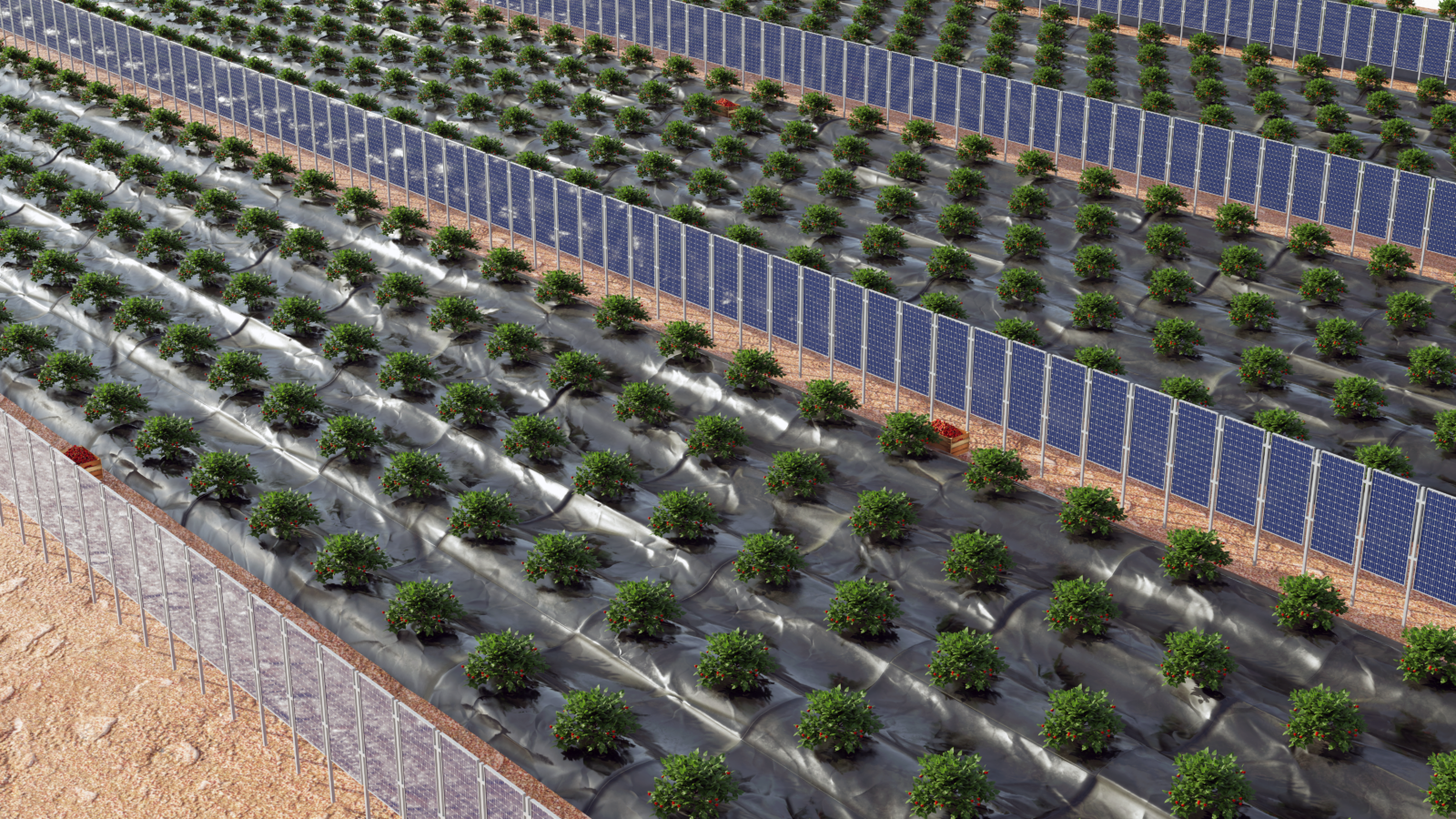
To mitigate these issues, farmers are exploring innovative solutions, such as providing shade during the hottest parts of the day. By offering protection from the intense afternoon sun while allowing the morning and evening sunlight to continue ripening the berries, the growth cycle can be optimized. This strategy not only prevents overheating but also promotes healthy berry development.

One such solution is the Sunzaun system, which provides a practical method of shading crops during peak heat hours. By using vertical solar panels, the Sunzaun system creates shade that helps prevent excessive heat from reaching the berries. This system allows farmers to protect their crops from the harmful effects of heat stress, all while enabling them to harness solar energy.

The integration of solar energy through agrovoltaic systems offers an additional benefit to farmers. Not only does the shade from solar panels protect the crops, but the system also generates electricity. This allows farmers to offset the cost of the solar installation by using the energy produced on-site or selling it back to the grid. In this way, the combination of agriculture and solar energy production increases the overall value of the farm, providing both environmental and economic benefits.

By embracing these sustainable solutions, berry farmers can enhance productivity and reduce the risks associated with extreme heat. The Sunzaun system and agrovoltaic technology provide a promising pathway to adapting to climate change and improving crop resilience, ultimately leading to healthier, more robust berry production.

SB 49: Advancing Renewable Energy on California Highways🛣☀

SB 49: Advancing Renewable Energy on California Highways🛣☀ 963 690 Sunzaun

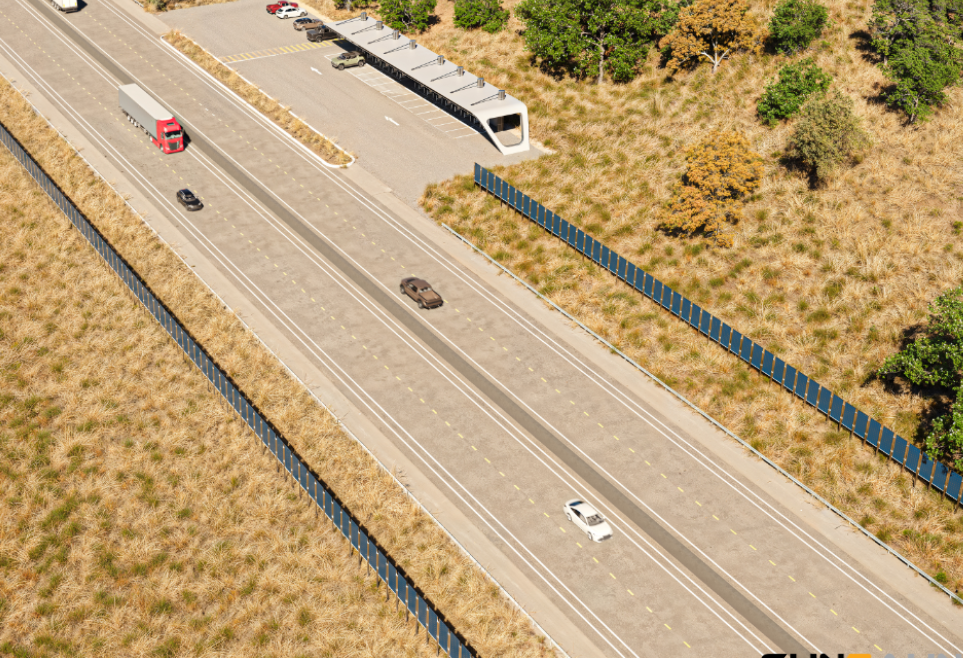
Senate Bill No. 49, also known as SB 49, was signed into law on October 7, 2023, marking a significant step toward advancing California’s renewable energy goals. The bill directs the California Department of Transportation (Caltrans) to evaluate the potential for developing renewable energy generation, energy storage, and electrical transmission infrastructure along state highways. The goal is to explore how public lands, particularly highways and their rights-of-way, can be leveraged to meet California’s energy needs while promoting sustainability.

read more