How Bodhi Hot Yoga & Fitness in San Rafael, California became the first business in the United States to install a vertical bifacial solar system in an urban environment — and why they’d do it all over again.
“We’re the first, I believe — the first in an urban environment to do it. In the US.”
— Bo Keeve, Co-owner, Bodhi Hot Yoga & Fitness
When most people picture a solar installation, they imagine rooftop panels or open fields. Bodhi Hot Yoga & Fitness in central San Rafael, California had neither to offer. What they had was a parking lot perimeter, an electricity bill climbing past $2,000 a month, and a relationship with Sunzaun built on years of shared yoga classes. That combination led to something no urban business in the United States had done before: a vertical bifacial solar installation right in the heart of the city.

About Bodhi Hot Yoga
Bodhi Hot Yoga & Fitness is a family-owned studio run by mother and son Katie and Bo Keeve, with Katie’s husband Damon supporting behind the scenes. Coming up on their second anniversary, Bodhi offers hot yoga, Pilates, and a range of fitness classes using infrared heating panels and added humidity — making it one of the more energy-intensive businesses on its block. The studio was built on four core values: community, boldness, curiosity, and adventurous fun. Those values didn’t just hang on a wall during the solar process. They guided every decision.
The Challenge
As an all-electric building with no gas on the property, Bodhi’s energy costs are entirely tied to the grid. In two years of operation, their monthly electricity bill more than doubled — from $500–800 at launch to over $2,000 as class schedules grew and demand increased. Solar had always been on their radar, but the rooftop was structurally complex and every parking space was too valuable to sacrifice. Conventional solar simply didn’t fit.
The Solution
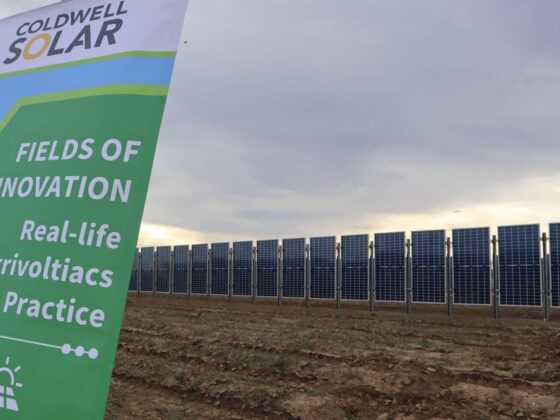
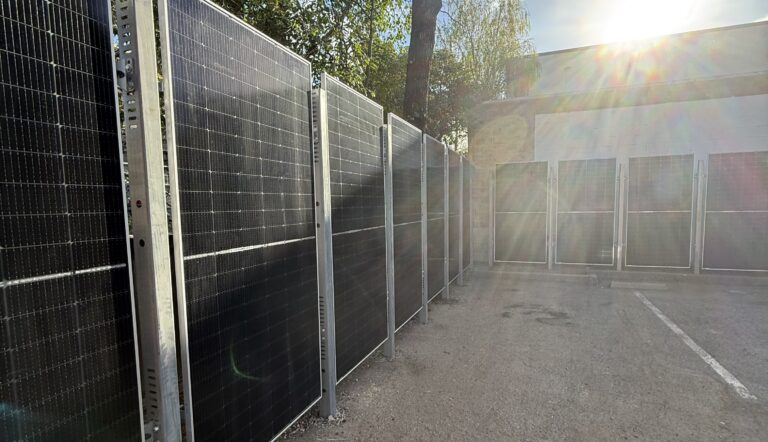
Sunzaun proposed something most people had never seen outside of Europe: 16 vertical bifacial panels, each standing eight to nine feet tall, installed along the perimeter of Bodhi’s back parking lot. Bifacial panels capture sunlight from both sides — direct irradiance on one face, reflected and diffuse light on the other — making vertical installation viable without a south-facing rooftop. The design also included a whitened wall section behind the panels to test whether surface reflection could further increase energy yield, a detail that will inform future urban installations. Bodhi Hot Yoga became the first business in the United States to install this type of system in an urban environment.

“They made it easy, they made it affordable, and it’s really fun. I would 100% recommend it.” — Katie Egan, Co-owner
The Construction Process
Katie braced for a month of disruption. The reality was eight to ten days. The Sunzaun crew managed city permitting, utility coordination, and site logistics from start to finish, with no significant involvement required from the owners. Workers kept the site clean daily, attended yoga classes during the build, and Sunzaun co-founder Helge Biernath even brought brewed beer for studio clients inconvenienced by the temporary parking closure. No parking spaces were lost. The bollards added around the panel bases looked, in Katie’s words, “phenomenal.” Bo, who had worried the panels would look industrial and out of place, called the finished result “really cool” and said it fits the lot like a modern perimeter fence.
The Results
The system is newly operational and full-year data will tell the definitive story, but projections are clear: $5,000–$10,000 in estimated annual savings on electricity. Zero parking spaces lost. Eight to ten days from start to finish. And a visible, working statement about who Bodhi is as a business — one that clients see every time they pull into the lot.
“Come do hot yoga, support, feel good, enjoy your day. Zero guilt.” — Beau Keeve
San Rafael is growing fast — new buildings rising across the street, eight and seventeen stories high. In that context, a small family-run studio choosing vertical solar isn’t just a financial decision. It’s a declaration about what kind of neighbor they intend to be. For other urban businesses watching their electricity bills climb with no rooftop solution in sight, Bodhi Hot Yoga is proof that a different path exists.