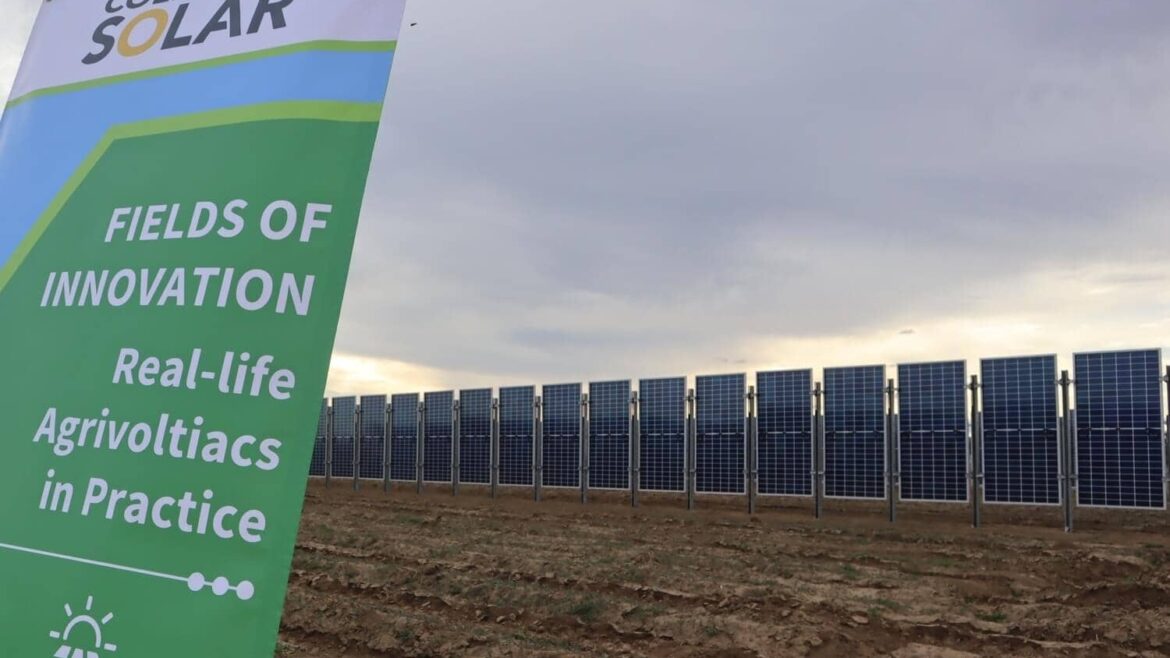
solar

UC Davis Expands Agrivoltaics Research, Includes New Sunzaun System

UC Davis Expands Agrivoltaics Research, Includes New Sunzaun System 1500 979 Sunzaun

Back in 2023, University of California (UC) Davis had a small set of Sunzaun vertical bifacial racking installed – three rows of three modules – to support early agrivoltaics (agriculture + solar, or photovoltaic, energy) research. Sunstall donated the racking system so the university could begin exploring how vertical solar might work alongside crops in California farmland.

Two years later, and after immense collaboration, the research site looks quite different.

A New Research Installation 

In late October 2025, several solar companies came together to complete a new, and significantly larger, system on one of the campus’s agricultural fields, just across from the original test site. Its completion came just in time for the 3rd Annual California Germany Agrivoltaics Day at UC Davis, organized by German American Chamber of Commerce. This event gathered researchers, farmers, and industry professionals to discuss the progress and potential of agrivoltaics in California, drawing on Germany’s extensive experience in the field. The newly expanded project offered visitors the opportunity to walk through the site, examine the equipment up close, and speak directly with the experts who are building and studying these systems. 

The photovoltaic acquisition process was led by Professor Majdi Abou Najm from the Department of Land, Air and Water Resources at UC Davis. He is one of California’s leading figures in agrivoltaics research.
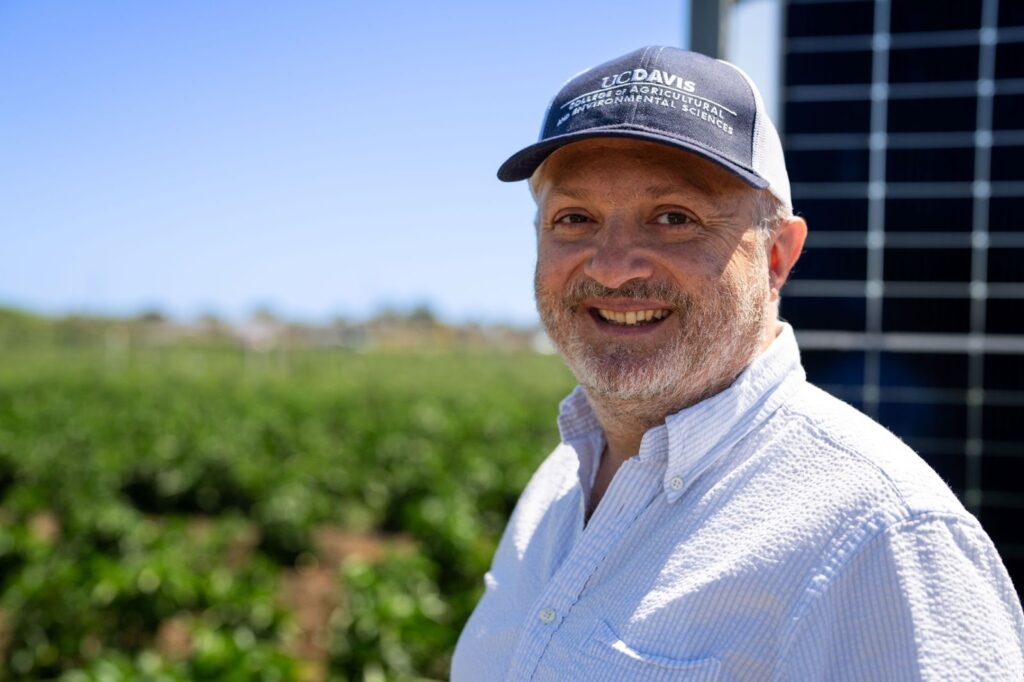
Professor Majdi Abou Najm standing in front of the old Sunzaun installation, surrounded by pepper and basil test crops.

Four Agrivoltaic Systems, One Field

The new research site is unique in its variety. Instead of a single system, the field now hosts four different ground-mounted PV designs, each with its own racking and module configuration. The multi-system format is meant to support decision-making by farmers, developers, and policymakers. comparison that allows researchers to look closely at energy production, crop response, and equipment access. The full site contains 448 modules totaling 200.44 kW.

“This site will inform growers how to select PV systems that align with their needs,” Abou Najm said. “If wind is damaging your crops, vertical systems can help. If heat stress is the issue, spectrally selective panels may be more appropriate,” he said, highlighting how agrivoltaic design choices can be tailored to specific on-farm challenges.

“My hope is to have this facility serve as the technology and science hub for shaping the future of agrivoltaics,” Abou Najm said. “For policy makers, it provides the visual (…) that this is not a one-size-fits-all technology (…), and that if designed with the agriculture-first mindset, can be transformative.”

From north to south, the systems include:

1. Sunzaun Vertical Bifacial System

Panels mounted vertically, producing from both east and west, designed to morning and afternoon energy generaton. This design offers uniform shading, easy equipment access, and strong potential for crop compatibility.
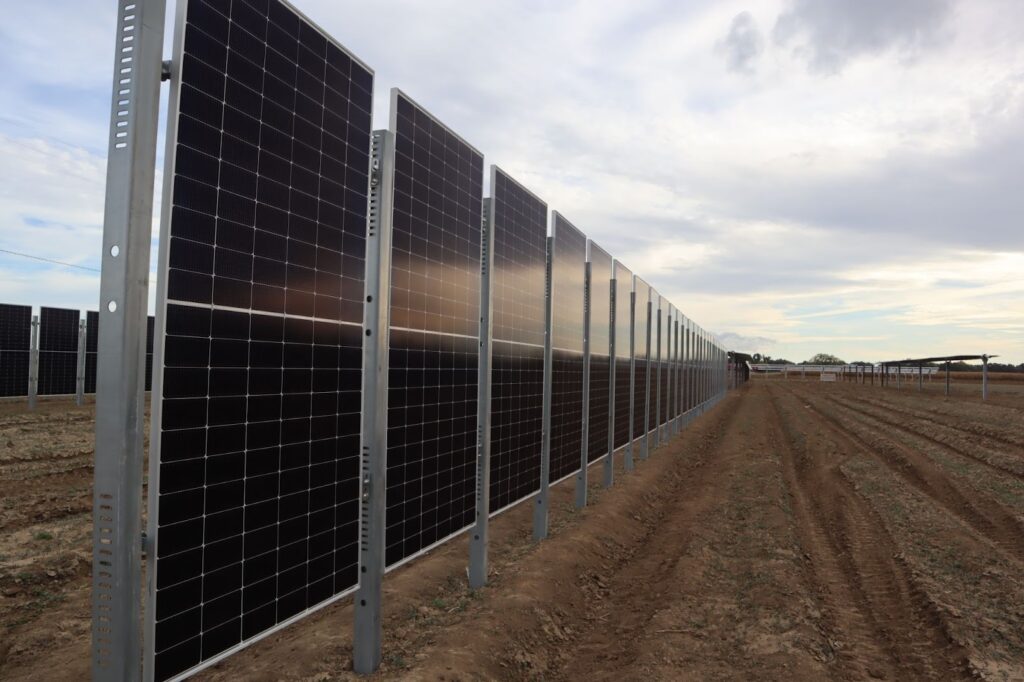
Photo Credit, Maximilian Dedden

2. Two Single-Axis Trackers

Two commercial tracker design, Nextracker and Nevados, installed next to each other to compare performance and crop impacts. Trackers typically deliver the highest energy yield, and the side-by-side setup gives researchers a rare opportunity to study differences in modules, design, and crop yield.
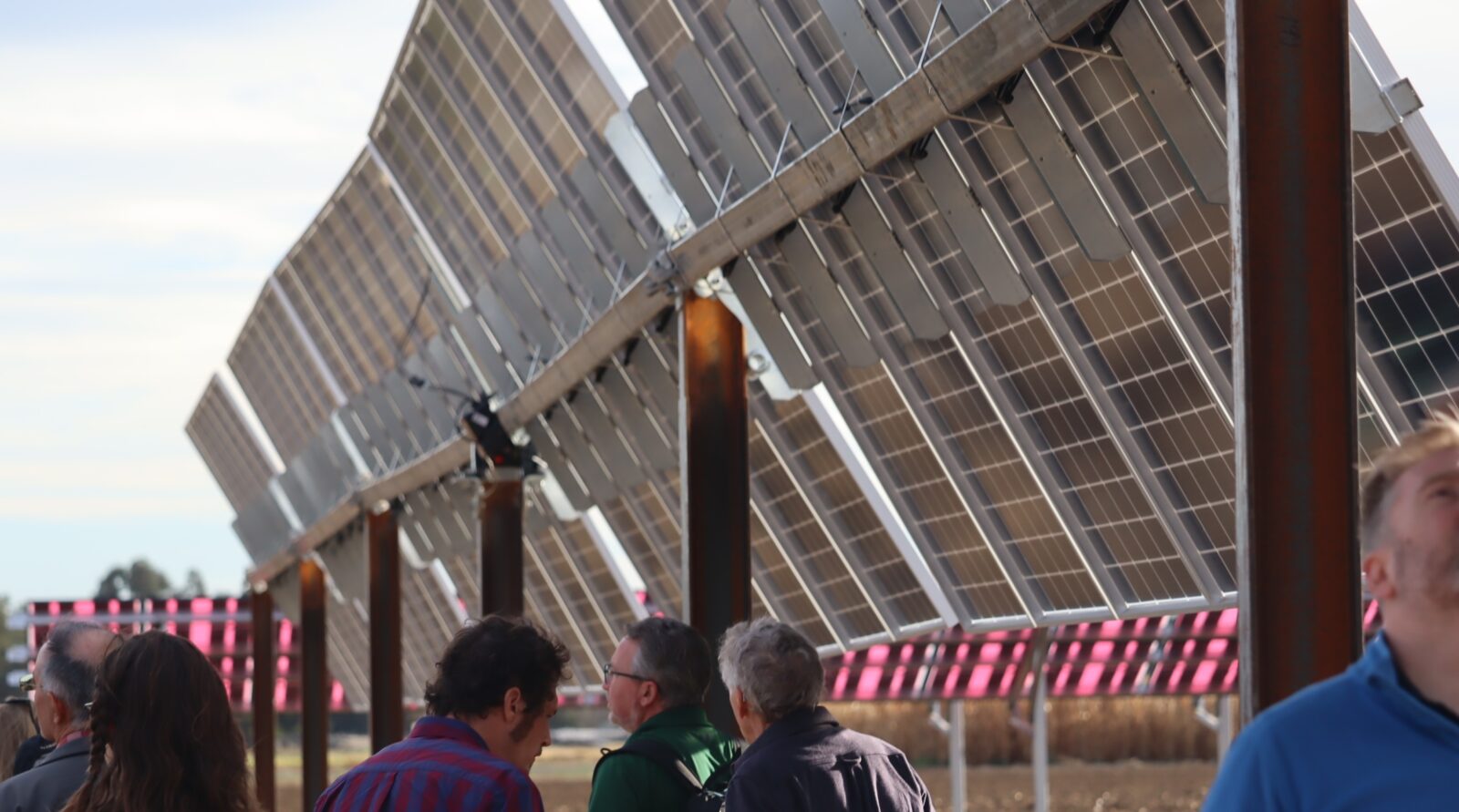
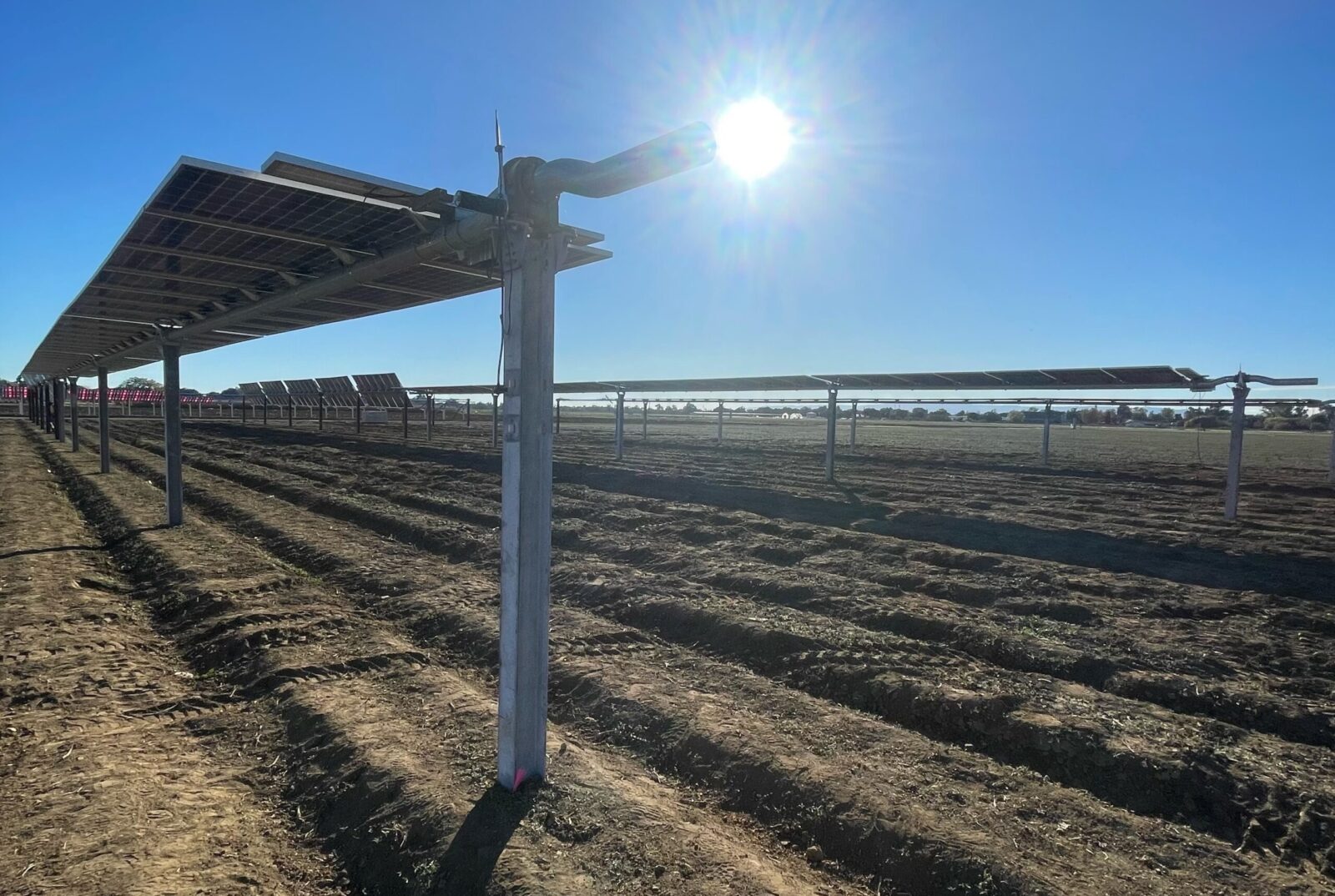
Photo Credit, Maximilian Dedden

3. OMCO Fixed-Tilt With Red Modules

A fixed-tilt system fitted with red-tinted solar modules. These are spectrally selective modules supplied by Constructive Systems to support plant growth while still generating electricity.
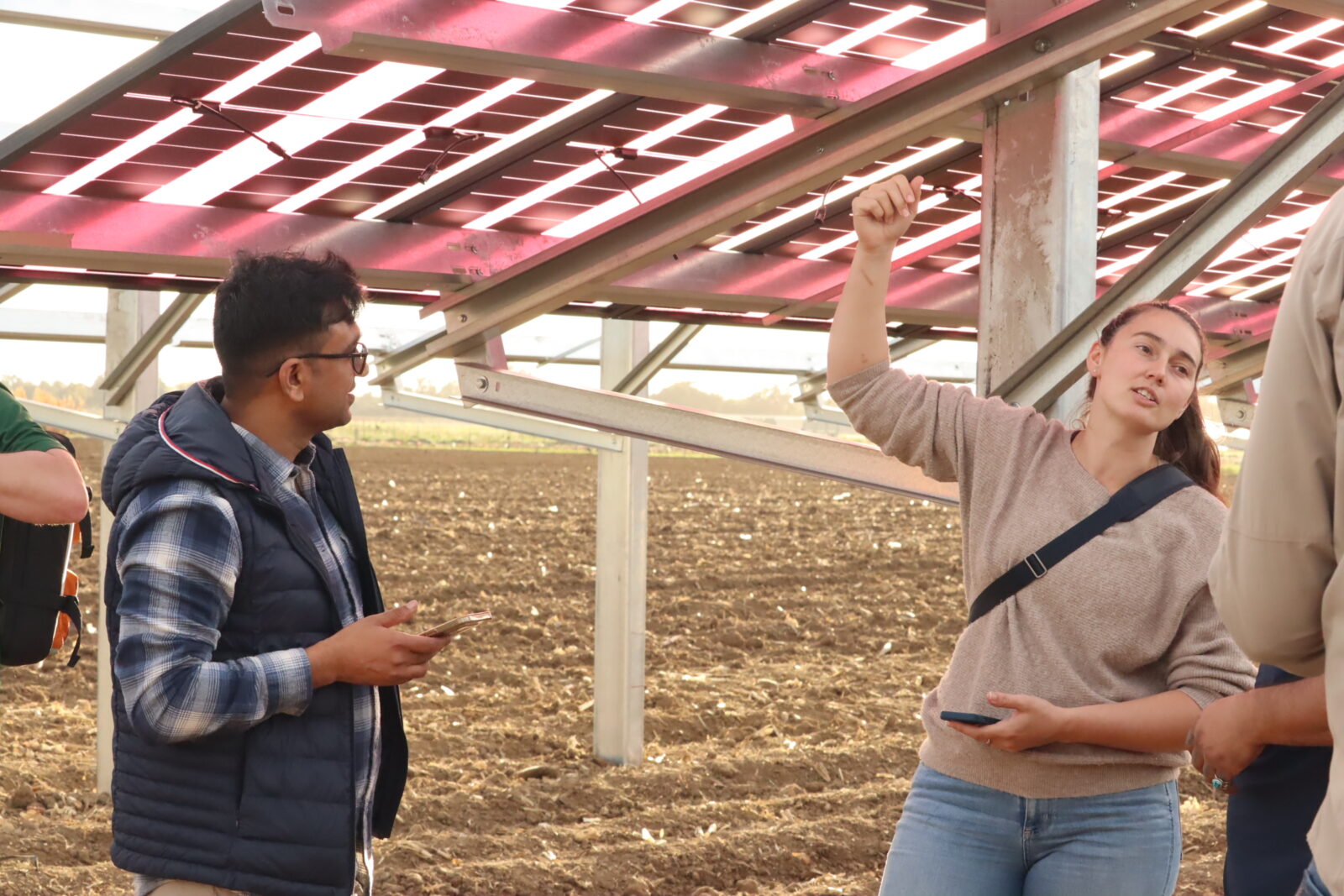
Photo Credit, Maximilian Dedden

Built for Farming Operations, Not Just PV Density

A defining feature of the installation is its approximately 50-foot row spacing; wide enough to accommodate commercial farming equipment. Abou Najm said the spacing was driven by harvesting realities.

“In California, tomato harvesters operate across six rows at a time, alongside trucks collecting the crop,” he said. Tighter spacing would make commercial harvesting inefficient and would ultimately result in more agricultural land being lost to solar.

Over the coming seasons and as funding permits, UC Davis researchers plan to grow tomatoes, among other crops, between PV rows while monitoring crop yield, soil moisture, microclimate effects, carbon sequestration, and operational compatibility.

Installed by Sunstall, Inc.

All four systems were installed by Sunstall Inc., the parent company of Sunzaun and is quickly becoming one of the leading agrivoltaics installation teams in the country. The project highlights Sunstall’s ongoing commitment to supporting universities and research organizations as agrivoltaics shifts from an emerging idea to a tested, practical approach to farming and energy production.

Agrivoltaics has the potential to make food production more resilient while reducing emissions from the electricity sector. Sunzaun is grateful to contribute to this work and looks forward to the research results that will come from UC Davis’s expanded testing ground.
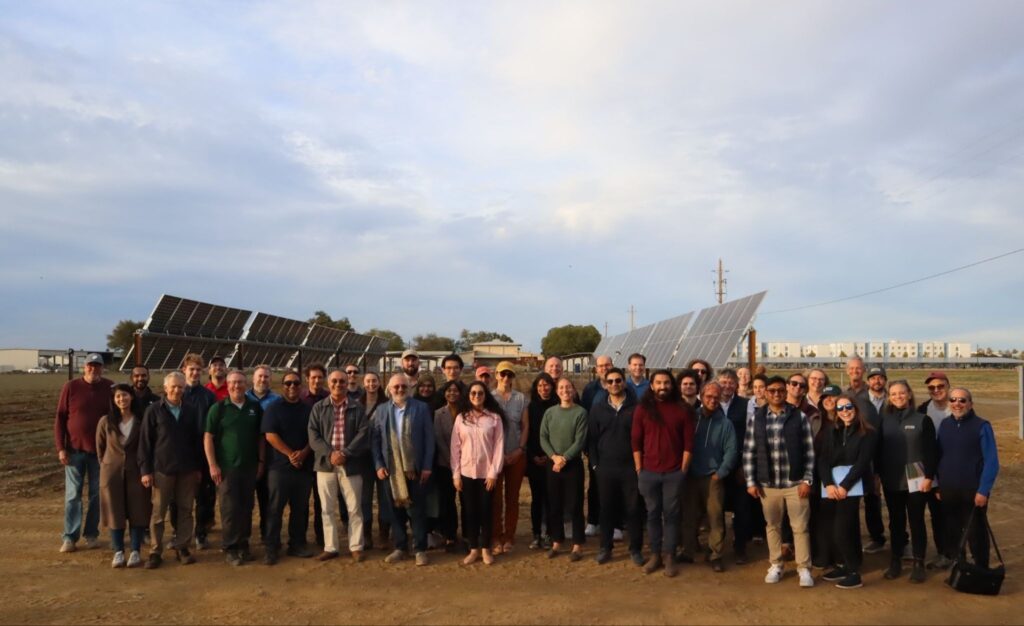
Group photo from the UC Davis Agrivoltaics Day Tour. Photo Credit, Maximilian Dedden

If you’d like to follow updates on vertical solar and agrivoltaics research, please consider joining our Newsletter! 

The previous blog post covering the original 9 module installation can be found here: https://sunzaun.com/vertical-agrivoltaics-at-uc-davis/
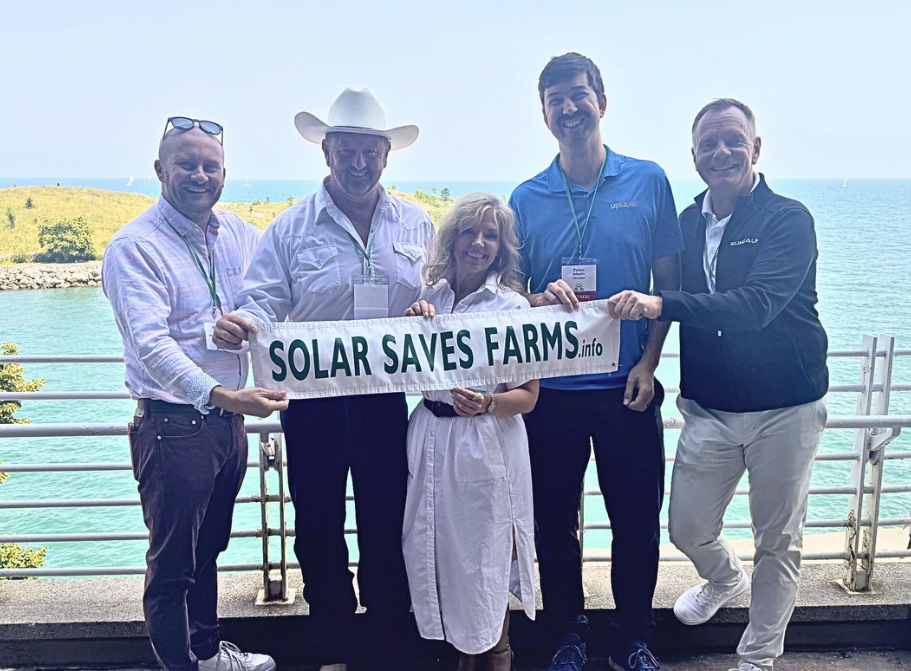
Putting Farmers First: Insights from the Solar Farm Summit

Putting Farmers First: Insights from the Solar Farm Summit 911 671 Sunzaun

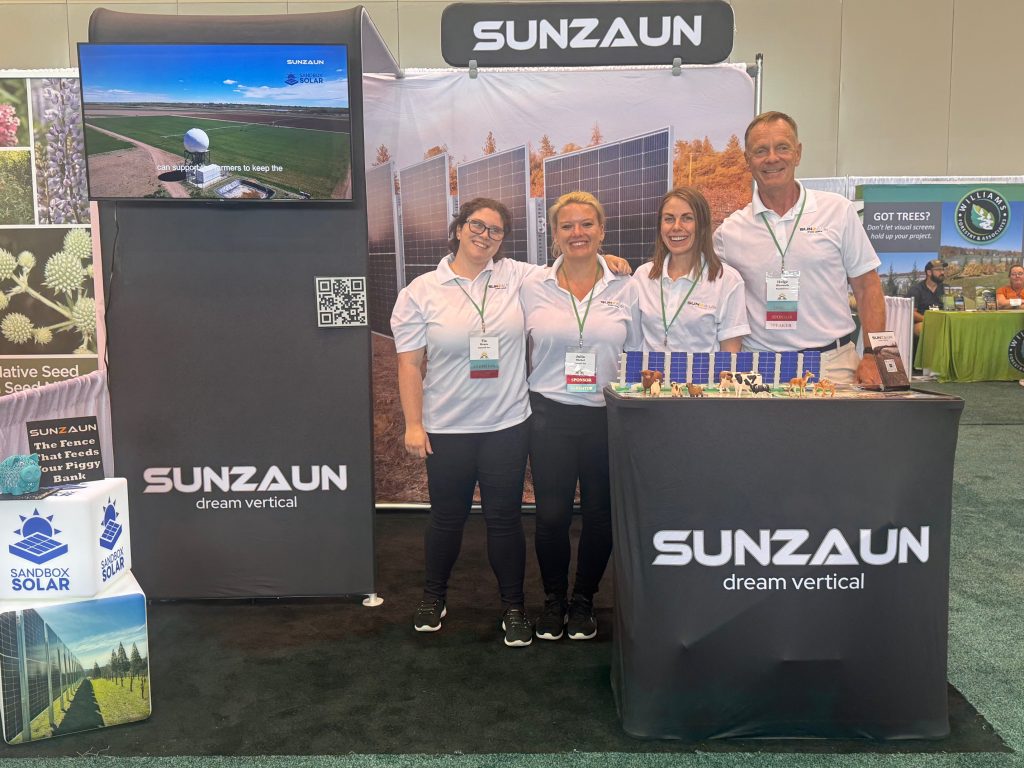
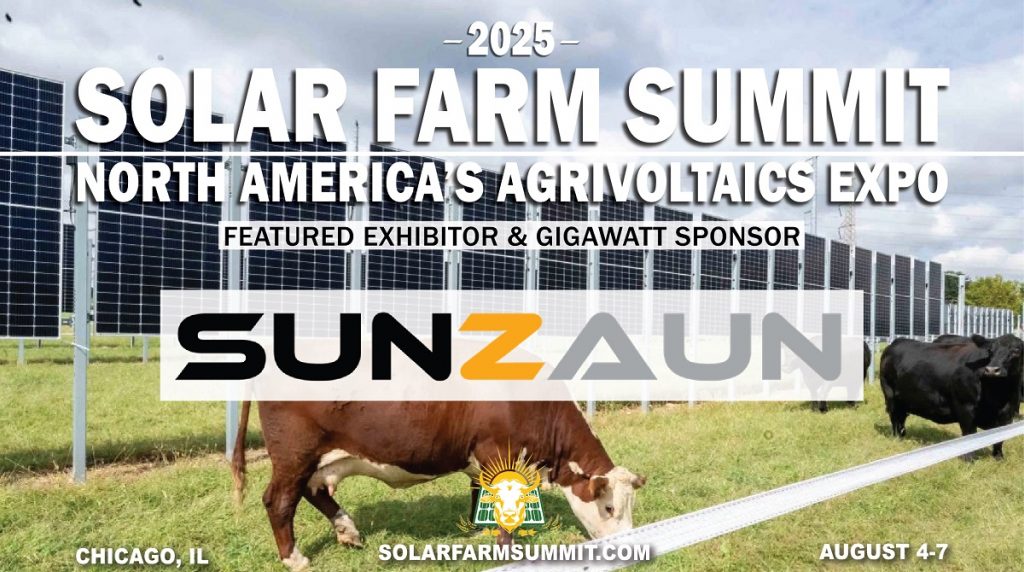
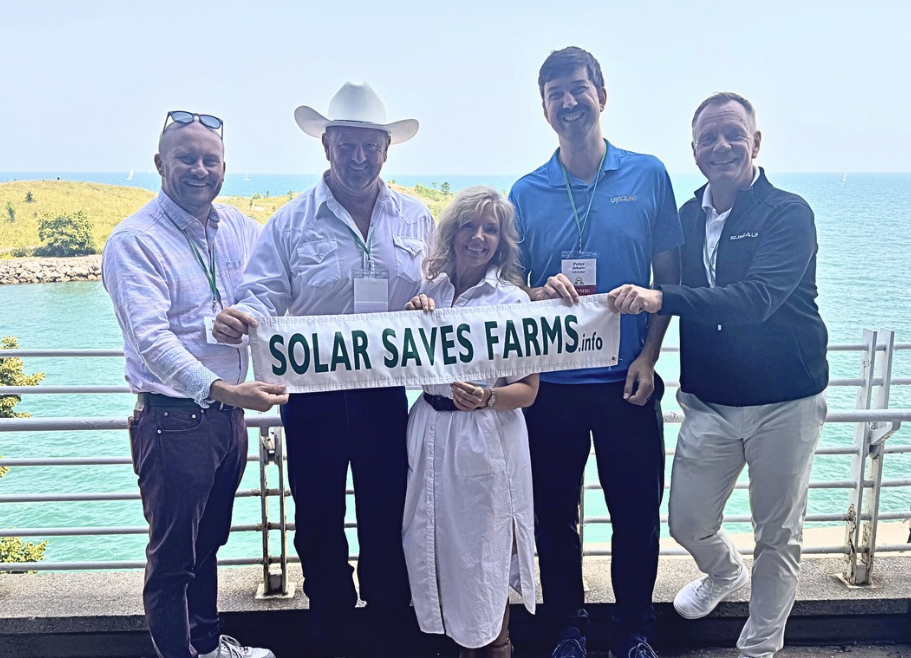
The 2025 Solar Farm Summit in Chicago brought together farmers, developers, researchers, state officials and industry leaders. Some came as curious explorers, others as passionate advocates, but all shared an interest in how solar and farming can work together. Sunzaun’s team was there to showcase its vertical bifacial solar racking system and join in on conversations shaping the next chapters of solar in agriculture. Helge Biernath, CEO of Sunstall, joined a panel with experts from Sandbox Solar and SolarEdge to share insights on vertical solar technology. 

Farmer’s Perspective

While representing its product at the booth, Sunzaun’s team also attended sessions covering topics such as livestock grazing health in the context of solar arrays, the latest developments in agrivoltaics policy and research, and American-made solar. One of the most memorable sessions was The Farmer’s Perspective on Agrivoltaics. Hearing directly from farmers offered an unfiltered look at what’s working, what’s not, and what’s needed to make agrivoltaics viable on real farms, especially for owner-operated or “smallholder” farms.

Key Takeaways:

  • Owner-operated farms are shrinking as corporate farming expands. This trend is due to multiple factors, including rising operational costs.
  • 80% wouldn’t change production systems for agrivoltaics. Many are still uncertain about its benefits.
  • Trust is low. According to an American Farmland Trust survey, the most trusted source of agricultural information for farmers is university-affiliated extension services, followed by farm associations. Solar developers often rank near the bottom of this list.

What Farmers Want from Solar Developers

To make agrivoltaics appealing, farmers with existing solar infrastructure emphasized a few must-haves from solar developers:

  • Clear contracts with transparent $/acre return on investment
  • Ongoing panel maintenance included
  • Freedom to keep farming with minimal disruption
  • Solar designs that fit agricultural needs, such as wide row spacing for machinery and to limit shading

Sunzaun’s Commitment to Farmers

Sunzaun believes that owner-operators deserve a strong voice in shaping agrivoltaic projects. When done right, these systems can provide reliable supplemental income while keeping farmland productive. Sunzaun works with farmers, researchers, EPCs, and developers to design solutions that protect farmland while generating clean energy.

Supporting Trusted Voices in Agriculture

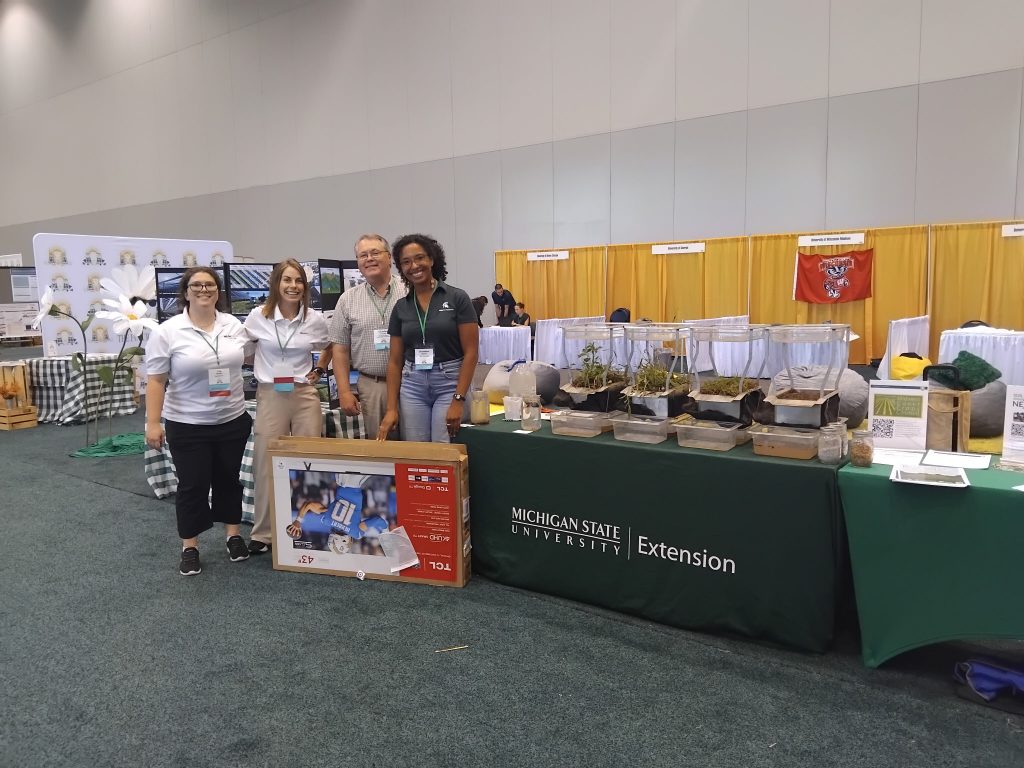
To wrap up the week, Sunzaun donated a TV to Michigan State University Extension Services to support their outreach efforts. Since extension services are among the most trusted sources of agricultural information, Sunzaun is proud to assist with the continuation of delivering reliable, accessible knowledge to the farming community.

Vertical Solar Is Changing the Game: Smarter Design, Real Results for Commercial Projects

Vertical Solar Is Changing the Game: Smarter Design, Real Results for Commercial Projects 512 288 Sunzaun

What if your business or facility could generate solar power all day long—even in snow-heavy regions, tight urban sites, or areas with limited rooftop availability?

That’s exactly what vertical solar installations are making possible.

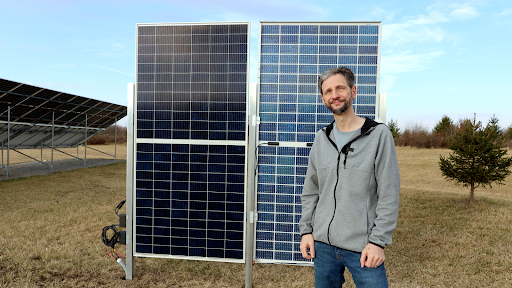
In a new YouTube breakdown, DIY solar enthusiast Projects With Everyday Dave explores how vertical solar setups—especially when paired with bifacial panels—are transforming solar efficiency in real-world environments. While his findings are residential in scale, the underlying data offers compelling insights for commercial developers, infrastructure planners, and large-scale property owners exploring smarter, space-efficient solar solutions.


What Is Vertical Solar?

Vertical solar refers to solar panels mounted upright (typically at a 90° angle), often facing east and west to capture sunlight throughout the day. Unlike traditional rooftop arrays tilted south, vertical orientation offers distinct advantages for large-scale applications:

  • Better solar generation in morning and afternoon hours
  • Reduced snow and debris accumulation
  • Installation flexibility along fences, façades, and perimeters

While bifacial panels (which generate energy from both sides) amplify these benefits, orientation is the real innovation, offering commercial projects new opportunities to integrate solar without sacrificing space or accessibility.

“You get morning sun on one side, and then afternoon sun on the other—it’s like having two shifts of power generation,” Dave explains.


Commercial Advantages: Where Vertical Solar Excels

Dave’s real-world data points to several key advantages that scale beautifully for business, industrial, and infrastructure use cases:

Reliable Performance in Snowy or Harsh Conditions

In colder climates, snow accumulation on rooftop panels causes maintenance headaches and production loss. Vertical panels eliminate buildup and maintain consistent output year-round—crucial for mission-critical facilities and distributed energy systems.

“No need to brush them off—huge for snowy regions,” Dave notes.

 Dual-Peak Output = Smarter Load Matching

East-west vertical arrays create dual generation peaks—morning and late afternoon—closely aligning with real-world commercial energy consumption, reducing demand spikes and enhancing storage and load management strategies.

“Those dual peaks show up clearly in the winter months,” says Dave, citing side-by-side production tests.

 Maximize Vertical Surfaces & Unused Perimeters

In dense commercial zones, rooftop space is often limited or reserved. Vertical solar enables energy generation from:

  • Parking lot boundaries
  • Security fences
  • Sound barriers
  • Retaining walls and building façades

This unlocks energy potential from unused vertical surfaces—turning barriers into power-generating assets.

“You can tuck solar into edges and margins—ideal for tight commercial footprints,” Dave shares.


 Performance in Real-World Conditions

While Dave shows that total average production for vertical panels is generally less than tilted panels, he explains that “In cloudy or snowy weather, the vertical setup held its own—even beat roof panels on some days.” So, even with variable weather, vertical panels proved surprisingly competitive. Sometimes they outperforming rooftop arrays, especially during:

  • Cloud cover
  • Snow events
  • Morning and evening load periods
  • Soiling (natural dust buildup)

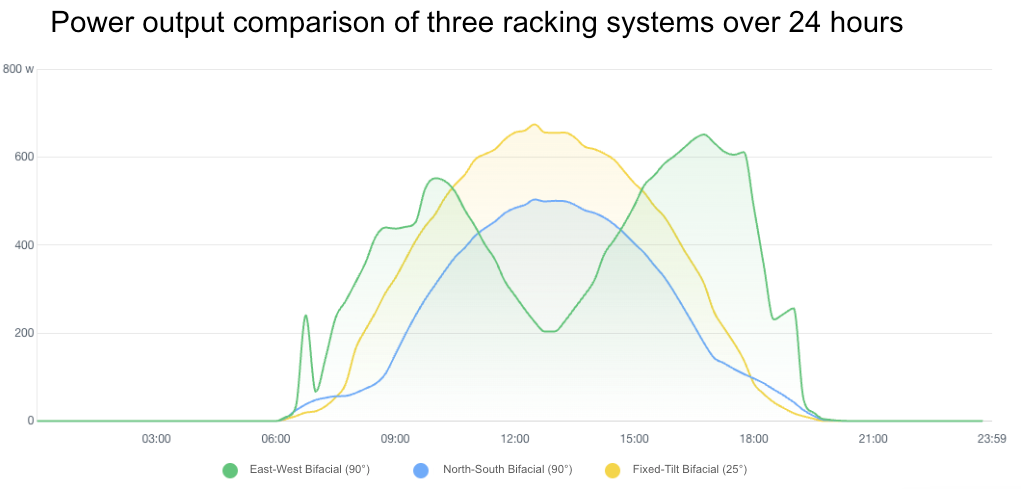
Speaking of morning and evening load periods (as seen in Figure 1), pairing east-west vertical arrays with north-south bifacial configurations, such as perimeter fences or site boundaries, can create a balanced, full-day generation profile. This is particularly ideal for commercial operations with long or irregular hours.

Figure 1: A diurnal power generation curve from the Sunzaun test site in Visalia, California, recorded on a day in mid-August 2024. All systems use the same module model; the only variable is orientation and tilt.


Application Spotlight: Where Vertical Solar Fits in Commercial Settings

Vertical solar is well-suited for:

  • Industrial, commercial, and private spaces such hospitals, data centers, and energy-intensive campuses
  • Agrivoltaic and rural infrastructure projects
  • Municipal and transportation facilities
  • Developments with limited roof access

It avoids challenges like:

  • Roof penetrations and structural retrofits
  • Shading from HVAC units or architecture
  • Safety clearances and access issues

“If your roof isn’t ideal, don’t force it. Go vertical. It’s scalable, accessible, and flexible,” says Dave.


Cost Considerations & Long-Term Value

While vertical arrays may require custom racking and bifacial panel premiums, the maintenance savings, flexible siting, and year-round reliability offer a compelling value proposition for long-term energy planning.

“In some climates, vertical systems may even outperform roof setups annually—especially when snow and shading are factors,” Dave emphasizes.


Final Thoughts: A Smarter Fit for Forward-Thinking Projects

Vertical solar isn’t just a niche idea—it’s a scalable design solution for commercial and infrastructure leaders looking to future-proof their energy strategy. From greater surface utilization to more consistent load matching, vertical systems offer a modular, resilient, and strategic path forward.

“It’s not just about cramming panels on a roof anymore,” Dave concludes. “Vertical solar gives you options—and at scale, those options make a lot of sense.”


Watch the Full Videos

🔗 Visit Projects With Everyday Dave on YouTube for real-world performance tests and innovative solar design ideas.

 Addressing Heat Stress in Berry Crops with Innovative Shade Solutions

 Addressing Heat Stress in Berry Crops with Innovative Shade Solutions 1600 900 Sunzaun

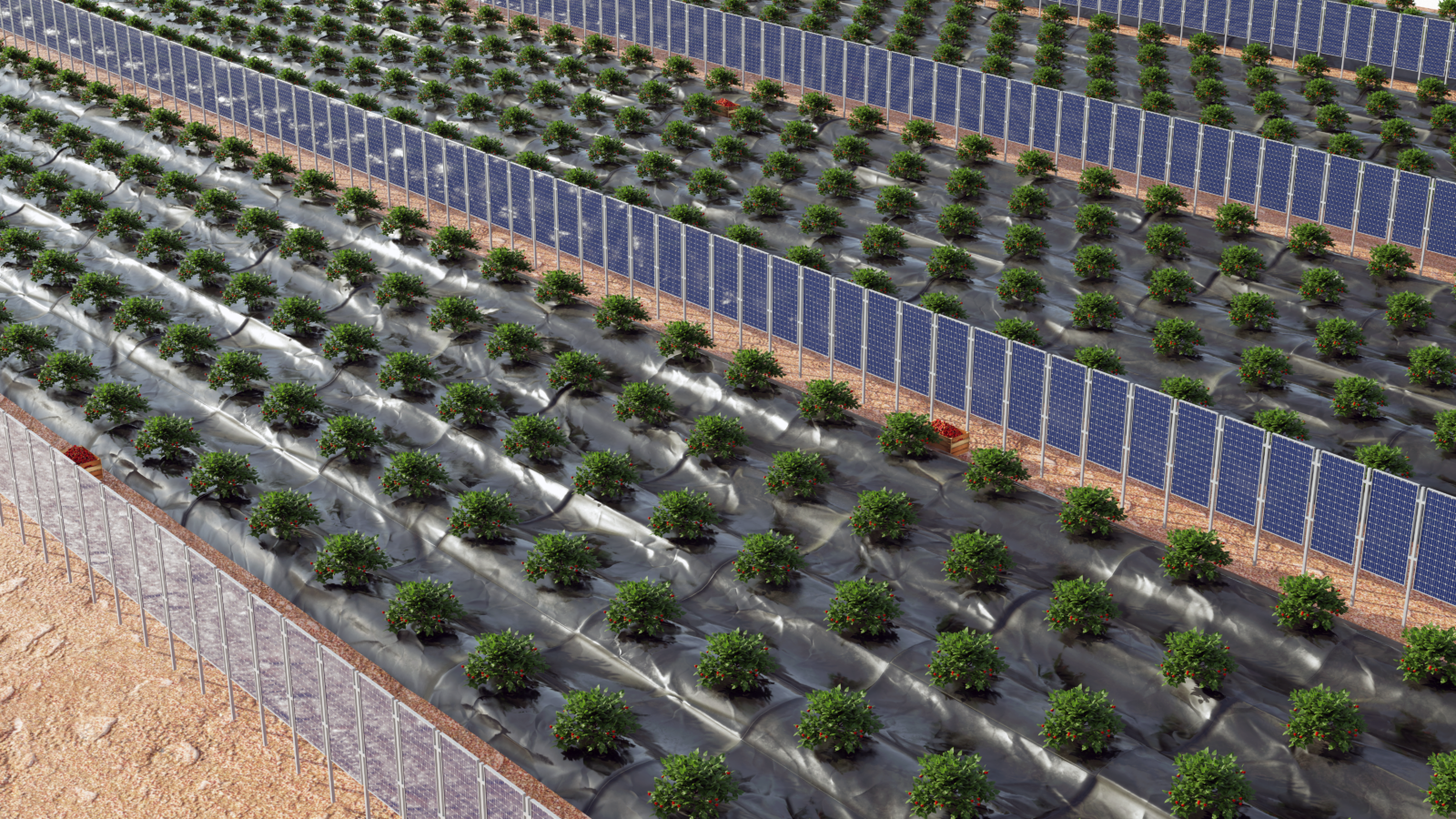
Heat stress is becoming a concern in berry farming, with rising temperatures putting crops at risk. While moderate heat stress levels can benefit berries by extending the growing season and enhancing flavor profiles. Excessive heat can have detrimental effects. The same heat that may initially boost plant health and fruit development can, when it becomes too intense, turn against the crop. Excessive heat disrupts plant growth, compromises productivity, and throws off the delicate hormone balance within the plant. This often results in problems such as sunscald and fruit cracking.

To mitigate these issues, farmers are exploring innovative solutions, such as providing shade during the hottest parts of the day. By offering protection from the intense afternoon sun while allowing the morning and evening sunlight to continue ripening the berries, the growth cycle can be optimized. This strategy not only prevents overheating but also promotes healthy berry development.

One such solution is the Sunzaun system, which provides a practical method of shading crops during peak heat hours. By using vertical solar panels, the Sunzaun system creates shade that helps prevent excessive heat from reaching the berries. This system allows farmers to protect their crops from the harmful effects of heat stress, all while enabling them to harness solar energy.

The integration of solar energy through agrovoltaic systems offers an additional benefit to farmers. Not only does the shade from solar panels protect the crops, but the system also generates electricity. This allows farmers to offset the cost of the solar installation by using the energy produced on-site or selling it back to the grid. In this way, the combination of agriculture and solar energy production increases the overall value of the farm, providing both environmental and economic benefits.

By embracing these sustainable solutions, berry farmers can enhance productivity and reduce the risks associated with extreme heat. The Sunzaun system and agrovoltaic technology provide a promising pathway to adapting to climate change and improving crop resilience, ultimately leading to healthier, more robust berry production.

SB 49: Advancing Renewable Energy on California Highways🛣☀

SB 49: Advancing Renewable Energy on California Highways🛣☀ 963 690 Sunzaun

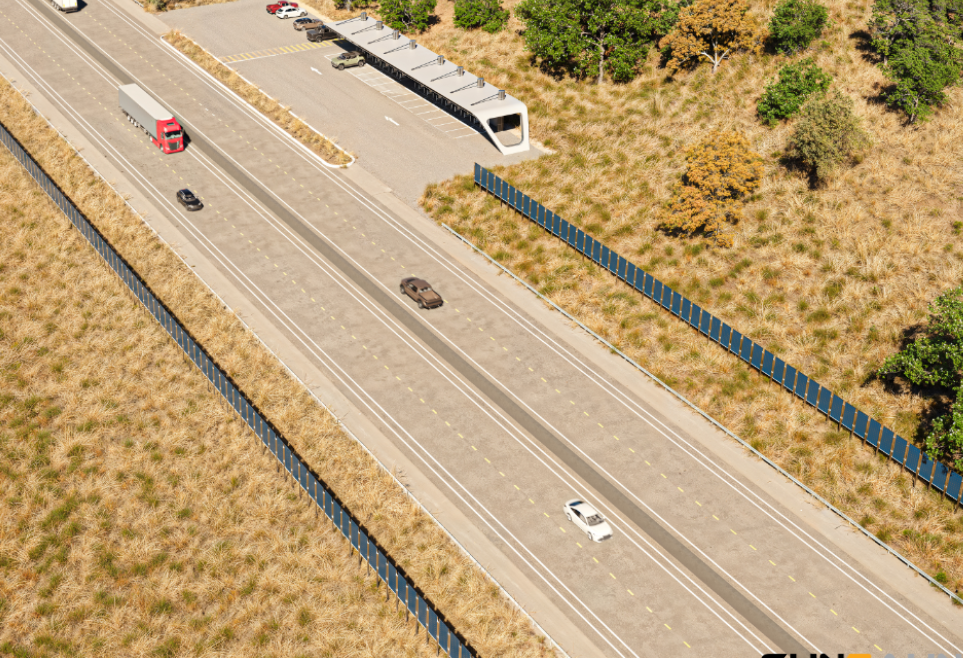
Senate Bill No. 49, also known as SB 49, was signed into law on October 7, 2023, marking a significant step toward advancing California’s renewable energy goals. The bill directs the California Department of Transportation (Caltrans) to evaluate the potential for developing renewable energy generation, energy storage, and electrical transmission infrastructure along state highways. The goal is to explore how public lands, particularly highways and their rights-of-way, can be leveraged to meet California’s energy needs while promoting sustainability.

read more

Soiling: Vertical Solar Wins The Battle

Soiling: Vertical Solar Wins The Battle 1069 605 Sunzaun

Solar power is everywhere—from rooftops in urban neighborhoods to expansive fields in rural areas. In 2030, solar energy is expected to account for 10% of the world’s electricity. With so many solar panels installed globally, one significant issue has emerged: soiling.

What Is Soiling?

Soiling refers to the accumulation of dirt and debris on solar panels. This seemingly minor problem has a major impact. Dust, pollen, and other particles settle on the surface of solar modules, blocking sunlight and reducing the amount of energy that can be converted into electricity. Studies have shown that soiling can decrease solar output by up to 30%.

The Water Cost of Cleaning

Cleaning solar panels to remove this buildup is a huge task. Globally, maintaining solar panels can consume up to 10 billion gallons of water each year. This water is used to wash away the dirt and grime that accumulates on the panels. In regions where water is scarce, this can be a significant environmental and economic concern.

Tilted vs. Vertical Solar Panels

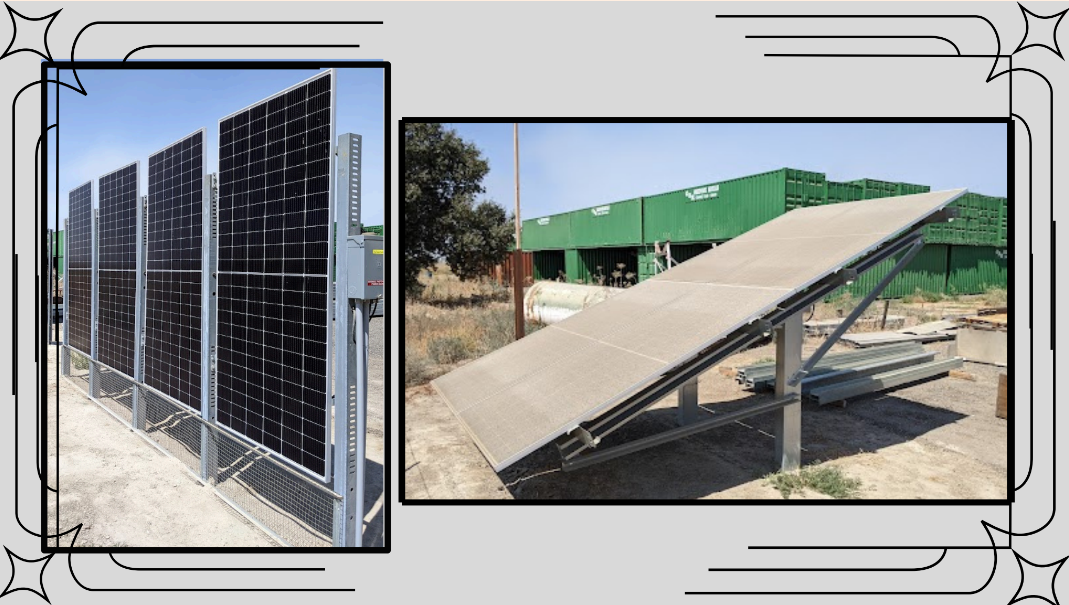
The problem of soiling is particularly pronounced with traditionally installed tilt solar panels. Panels installed at an angle are more prone to dust accumulation because the tilted surface allows dust and debris to settle and stick more easily.

For example, when two panels of the same make and model are installed simultaneously—one at a tilt and one in a vertical position. The tilted panel will become significantly dirtier over time compared to its vertical counterpart as seen above. This is because the angled surface provides a larger area for dust to settle, leading to more frequent and intensive cleaning needs.

In contrast, vertical solar panels—those installed perpendicular to the ground—experience less soiling. The vertical orientation reduces the surface area that dust can adhere to, making it easier to keep the panels clean. Because the panels are not angled, debris tends to slide off more easily, which can significantly cut down on cleaning needs and the associated water usage.

A Cleaner Future

The shift towards vertical solar panels could be a game-changer in tackling the soiling issue. By reducing the amount of dirt that collects on the panels, vertical installations can not only enhance energy efficiency but also lower maintenance costs and environmental impact.

As the solar industry continues to grow, addressing the challenge of soiling will be crucial. Embracing innovative solutions like vertical solar panels could help make solar power cleaner and more sustainable, paving the way for a brighter, greener future.