

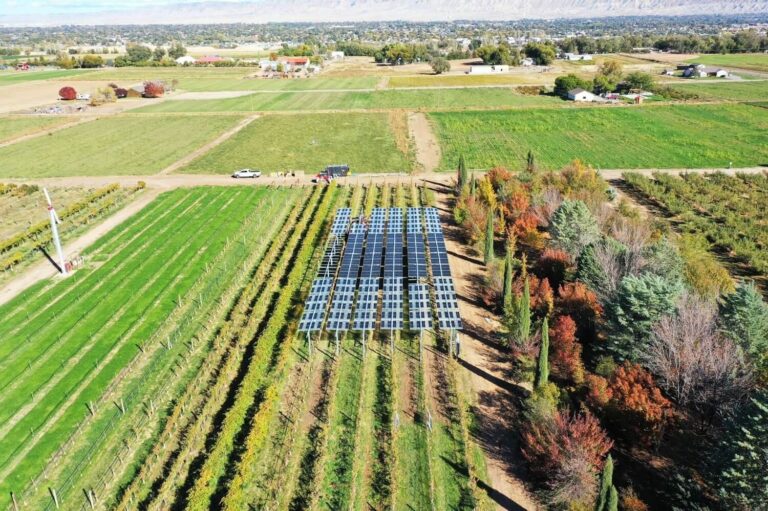
Aerial Photo by Michael Lobato, Colorado State University
In the crisp weather of mid-October, our team completed one of the most unique and inspiring projects in our portfolio to date. Set against the dramatic mountain backdrop of Grand Junction, Colorado, this photovoltaic (PV) system marks a major milestone for agrivoltaics in the US. At completion, the structure stands as the largest viticulture-focused agrivoltaic system (or “viti-voltaic”) in the country.
Our Partners
We were proud to serve as the installation contractor under Sandbox Solar, a local EPC and leader in agrivoltaics across the region. The single-axis tracking system was designed and supplied by SolarGik, and spearheaded by Dr. Horst Caspari, a Colorado State Professor and expert viticulturist.
Located near Colorado State University’s Western Campus, Dr. Caspari’s quarter-acre research vineyard of Chardonnay grapes will serve as a living laboratory for the combination of solar energy and sustainable agriculture. Here, researchers will study everything from soil compaction caused from solar installation to shifts in microclimates and how different panel opacities affect light transmission, vine growth, and fruit quality.
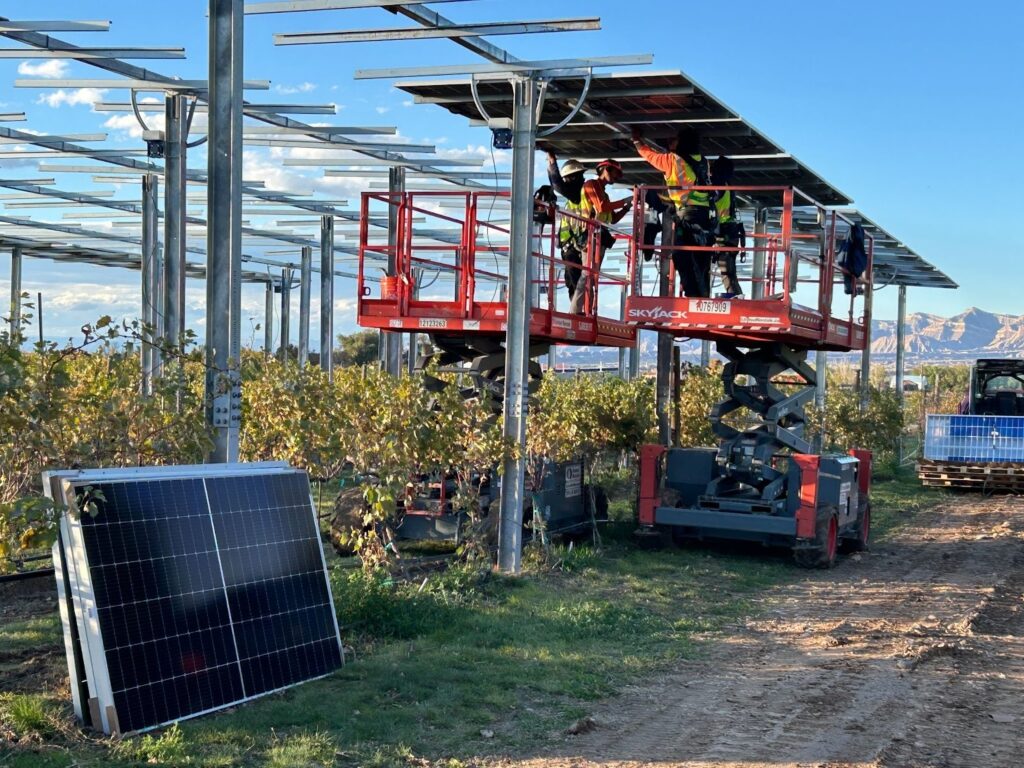
Photo by Dr. Horst Caspari
Why This Installation Was Different (and Challenging)
As interest in agrivoltaics continues to grow, we have had opportunities to build several agrivoltaic systems. With previous builds, our team worked on blank-slate landscapes, not yet populated with soon-to-be-planted vegetation. In this case, however, our crew was faced with the task of building a PV system within rows of mature, established grapevines.
Our installation team worked carefully within these vines — driving piles, assembling the racking, and installing 240 solar panels — while avoiding major disruption to the crop. This project called for a new level of planning and adaptability, as we adjusted our usual construction methods.
- The result: a sleek 14-foot-tall steel structure, designed at this height to let the right amount of sunlight in between rows of panels.
Beyond Energy Generation
According to the Colorado Newline, the system is projected to generate approximately 155 megawatt-hours of clean electricity per year, supplying roughly 40% of CSU Western Campus’s annual energy needs. But the impact and purpose of this project goes far beyond energy production. As Dr. Caspari stated, this system was designed with an “A before the V” mindset. In agrivoltaics, this means agriculture takes priority over voltaics.
For this particular design, the agricultural benefits include:
- Protection from hail and frost
- Even a single hailstorm or frost can ruin nearly an entire grape yield. The PV canopy offers an added layer of defense and creates a more temperate microclimate, shielding crops from weather extremes.
- Even a single hailstorm or frost can ruin nearly an entire grape yield. The PV canopy offers an added layer of defense and creates a more temperate microclimate, shielding crops from weather extremes.
- Beneficial Shading
- Partial shading helps moderate soil temperatures, allowing the ground to retain moisture longer and reducing irrigation needs. It also protects delicate grapes from intense solar radiation during the hottest weeks of the summer.
Heading into chilly November, observations already show milder temperatures under the system, confirming the climate benefits of elevated PV systems for sensitive crops like grapes.
Looking Ahead
While the U.S. still has ground to cover compared to Europe’s agrivoltaic movement, this project represents a large step in the right direction. It stands as a living demonstration for how clean energy infrastructure can enhance, rather than compete with, agricultural productivity, and we’re thrilled to have contributed to this advancement.
As more growers and researchers explore dual-use solar, Sunstall Inc. looks forward to continuing our role in building the systems that make this progress possible; from vineyards to orchards to open fields.
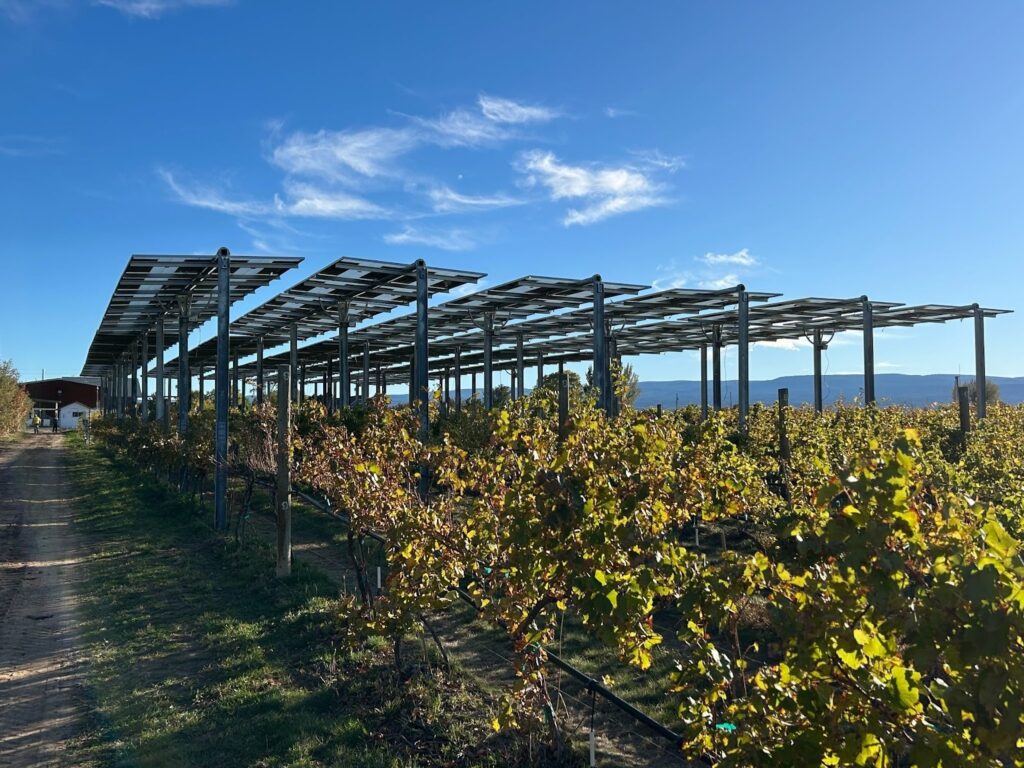
Photo by Dr. Horst Caspari
To lean more about the ongoing viti-voltaic research, visit: https://aes.colostate.edu/wcrc/orchard-mesa/viticulture/